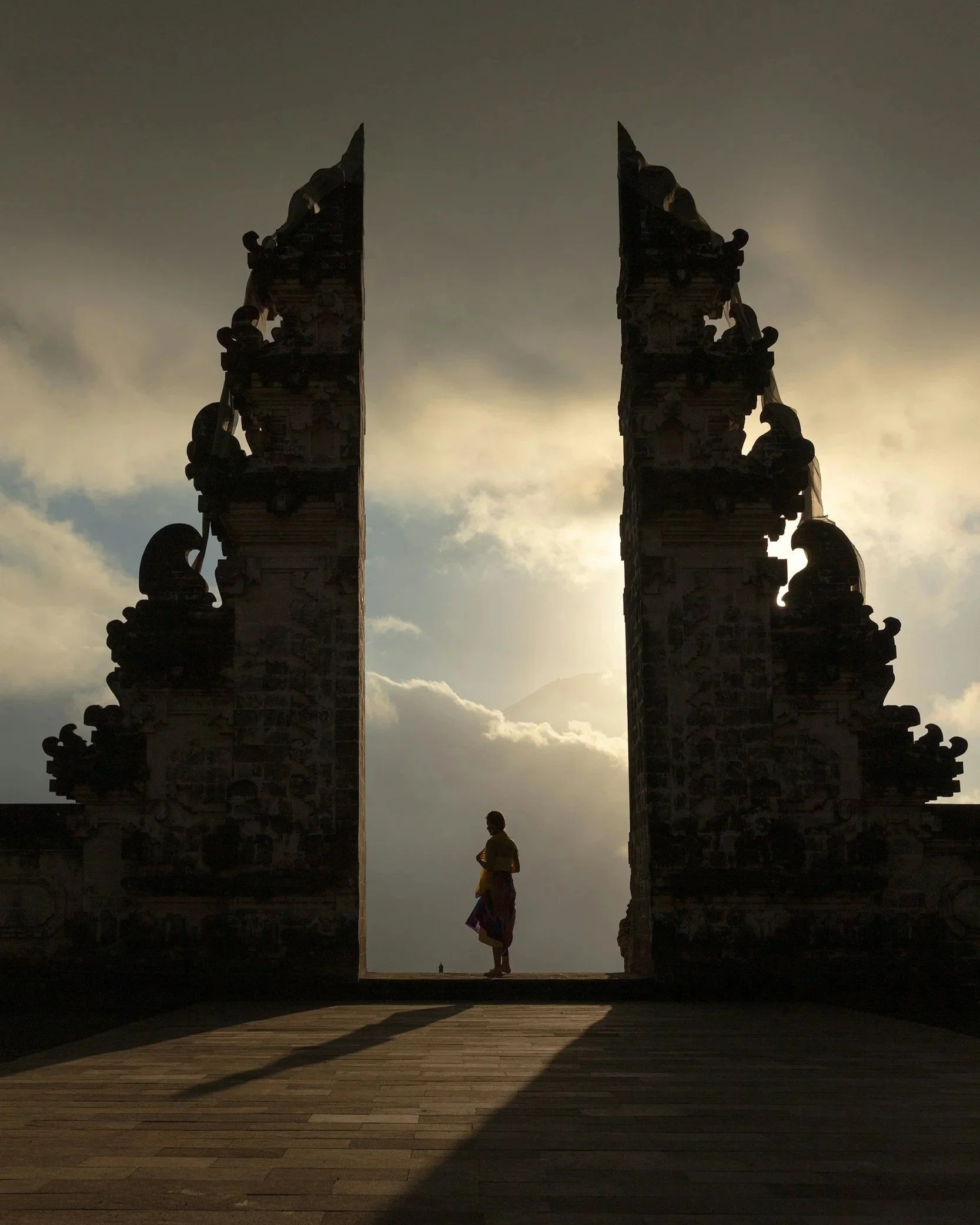
If you have explored Bali, chances are you have passed through a Candi Bentar without realizing how much meaning stands within its two towering halves.
One of the most recognizable features of Balinese architecture, the Candi Bentar is a split gate found at the entrances of temples, traditional compounds, villages, and other important spaces throughout the island. Its distinctive form creates an open passage between two symmetrical structures, marking a transition from one space to another.
But the Candi Bentar is more than an architectural landmark. Together with another important gateway, the Kori Agung, it forms part of the journey through the different spaces of a Balinese temple.
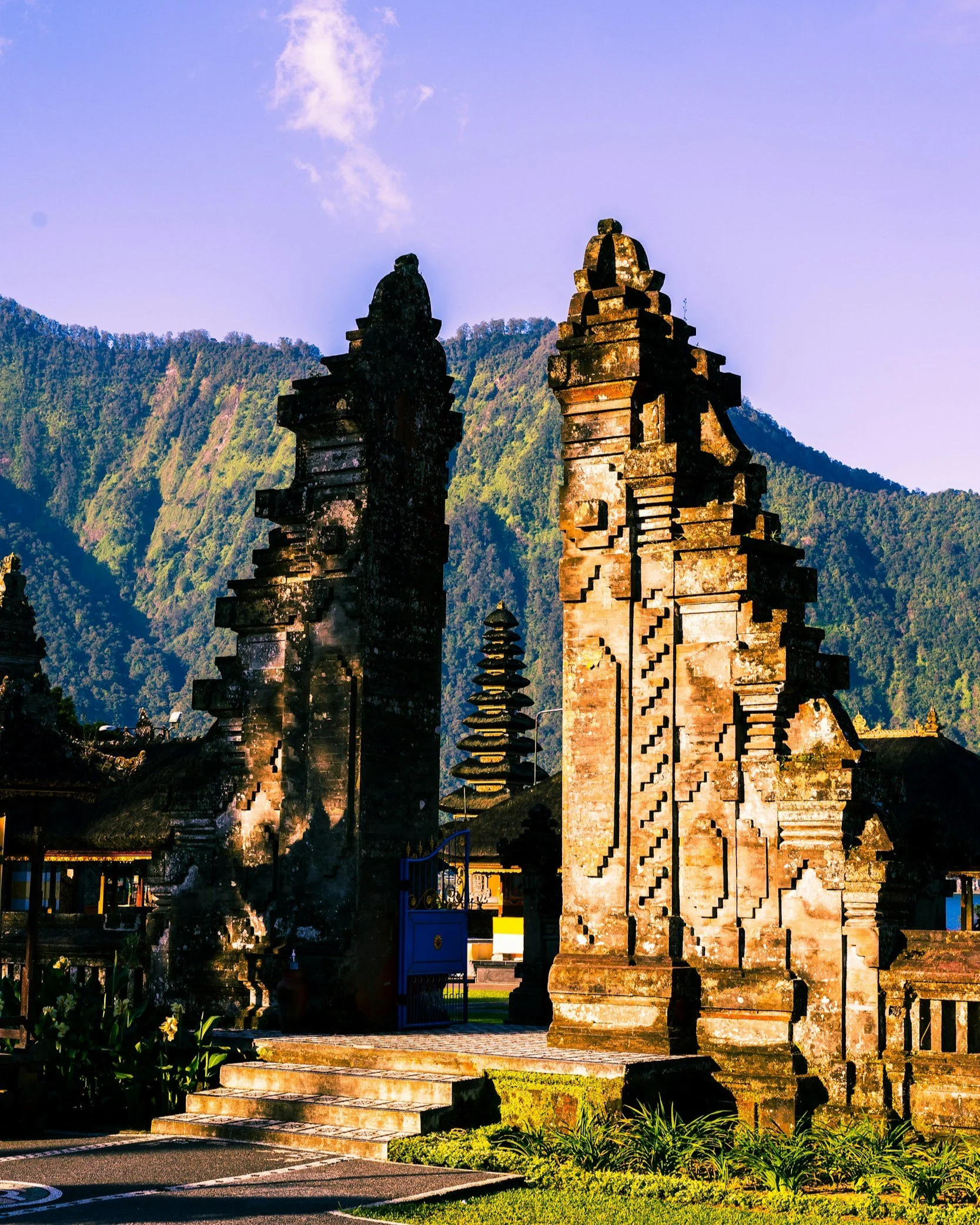
What Is a Candi Bentar?
The name Candi Bentar refers to its most recognizable feature: a structure that appears to have been divided cleanly down the middle.
Unlike a conventional doorway, the two sides remain open, creating a passageway between them. In temple architecture, the Candi Bentar generally marks the entrance to the outer area of a temple compound, known as the nista mandala.
Its openness is part of what makes the structure so striking. Rather than closing off one space from another, the gate creates a sense of movement—a visual invitation to pass through.
The Journey Through a Balinese Temple
The Candi Bentar is not the only gateway found within Balinese temple architecture.
Further inside, visitors may encounter the Kori Agung, or Great Gate. Unlike the open split gate, the Kori Agung is a more enclosed and architecturally significant gateway leading toward the temple’s inner and more sacred areas.
The difference between the two can be understood through a simple image.
Think of the Candi Bentar as the entrance that welcomes you into a home. It marks the beginning of the journey. The Kori Agung is more like the doorway to a private sanctuary—an entrance that signals that you are moving into a deeper and more sacred space.
Together, they create a gradual transition from the everyday world toward the spiritual heart of the temple.
Two Halves, One Passage
The two halves of the Candi Bentar are often interpreted through the broader Balinese idea of balance and duality.
Light and darkness. Day and night. Beginning and ending. The two sides stand separately, yet neither feels complete without the space between them.
That open space is perhaps the most interesting part of the gate.
Rather than being something that separates, it becomes something that connects. You walk through the space between the two structures, leaving one environment behind and entering another.
For many, this makes the Candi Bentar a beautiful metaphor for balance—not the absence of opposites, but the ability to move between them with awareness.
More Than a Gateway
Across Bali, architecture often carries meaning beyond its physical purpose. A gate can mark a boundary, guide movement, protect a sacred space, and remind people to approach what lies beyond with the appropriate sense of respect.
The Candi Bentar does all of this while remaining unmistakably beautiful.
At Bisma Eight, we believe that looking more closely at Bali’s architecture can reveal another layer of the island’s story. A Candi Bentar may look like two walls of stone and brick, but pause for a moment and it becomes something else: a passage, a threshold, and a quiet reminder that every journey begins by crossing from one space into another.
Join Bisma Eight’s Storytelling Experience → The Island’s Wisdom