Ngaben in Bali: The Sacred Balinese Cremation Ceremony Explained
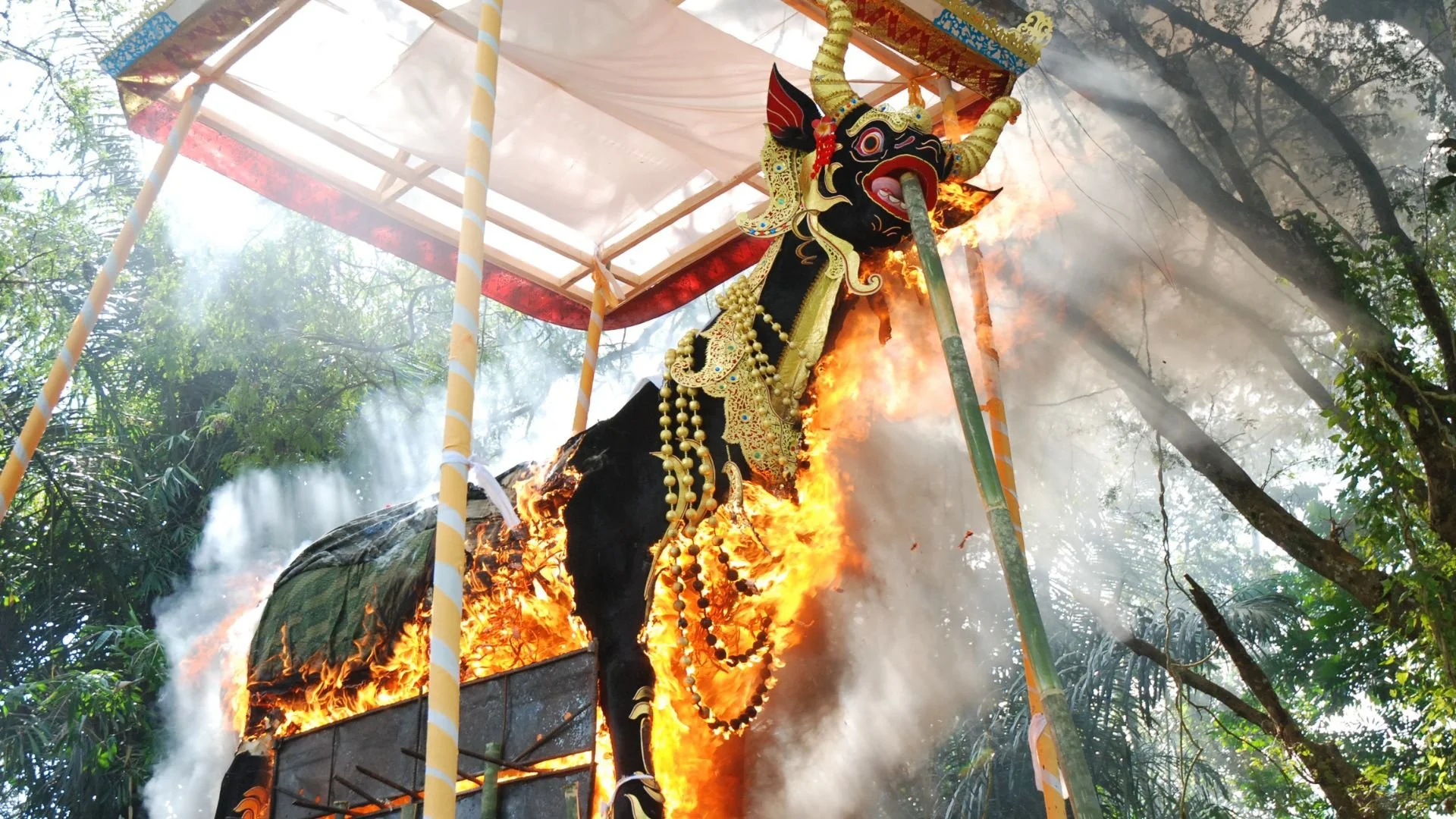
In Balinese Hindu belief, death is not viewed as an ending, but as a sacred transition of the soul into its next journey. The Balinese cremation ceremony, known as Ngaben, is one of the island’s most important spiritual rituals, performed to release the soul from its earthly body and guide it back toward the spiritual realm. Rather than focusing solely on grief, the ceremony honors the continuation of life, reminding families that the soul is eternal and continues beyond the physical world.
The Meaning of Ngaben in Balinese Hinduism
Balinese philosophy teaches that the human body is a temporary vessel formed from the five natural elements, known as the Panca Maha Bhuta: earth, water, fire, air, and ether. Through the sacred act of cremation, these elements are symbolically returned to their origin, allowing the spirit to be purified and freed from worldly attachments.
This purification helps the soul continue its spiritual journey toward reincarnation, or ultimately, moksha—spiritual liberation. For this reason, Ngaben is considered not only a funeral ceremony, but also a profound act of love and spiritual responsibility.
How a Balinese Cremation Ceremony Is Performed
Every stage of the Ngaben ceremony carries deep symbolic meaning. Families prepare elaborate offerings, prayers are recited by priests, and sacred gamelan music accompanies the procession. The cremation itself is often preceded by a ceremonial parade through the village, during which the body is carried in a beautifully decorated tower or sarcophagus.
The atmosphere may surprise visitors. While the ceremony is deeply emotional, it is also filled with color, ritual, music, and community participation. The focus is not solely on mourning, but on ensuring that the soul is released with dignity, respect, and spiritual guidance.
A Community United in Ceremony
One of the most remarkable aspects of Balinese cremation traditions is their communal nature. Families, neighbors, and entire villages often come together to help prepare offerings, build ceremonial structures, and support the bereaved. The ceremony becomes a shared expression of Dharma, devotion, and unity across generations.
For visitors, witnessing Ngaben offers a rare insight into Bali’s spiritual worldview. It reveals a culture that understands death as part of a larger cycle of existence, where honoring the departed is ultimately a way of honoring the continuity of life itself.
At Bisma Eight, we believe that understanding traditions such as Ngaben allows travelers to experience Bali with greater depth and respect. Behind every procession, offering, and prayer is a philosophy that reminds us that life, death, and renewal are all sacred parts of the same journey.
Join Bisma Eight’s Storytelling Experience → The Island’s Wisdom