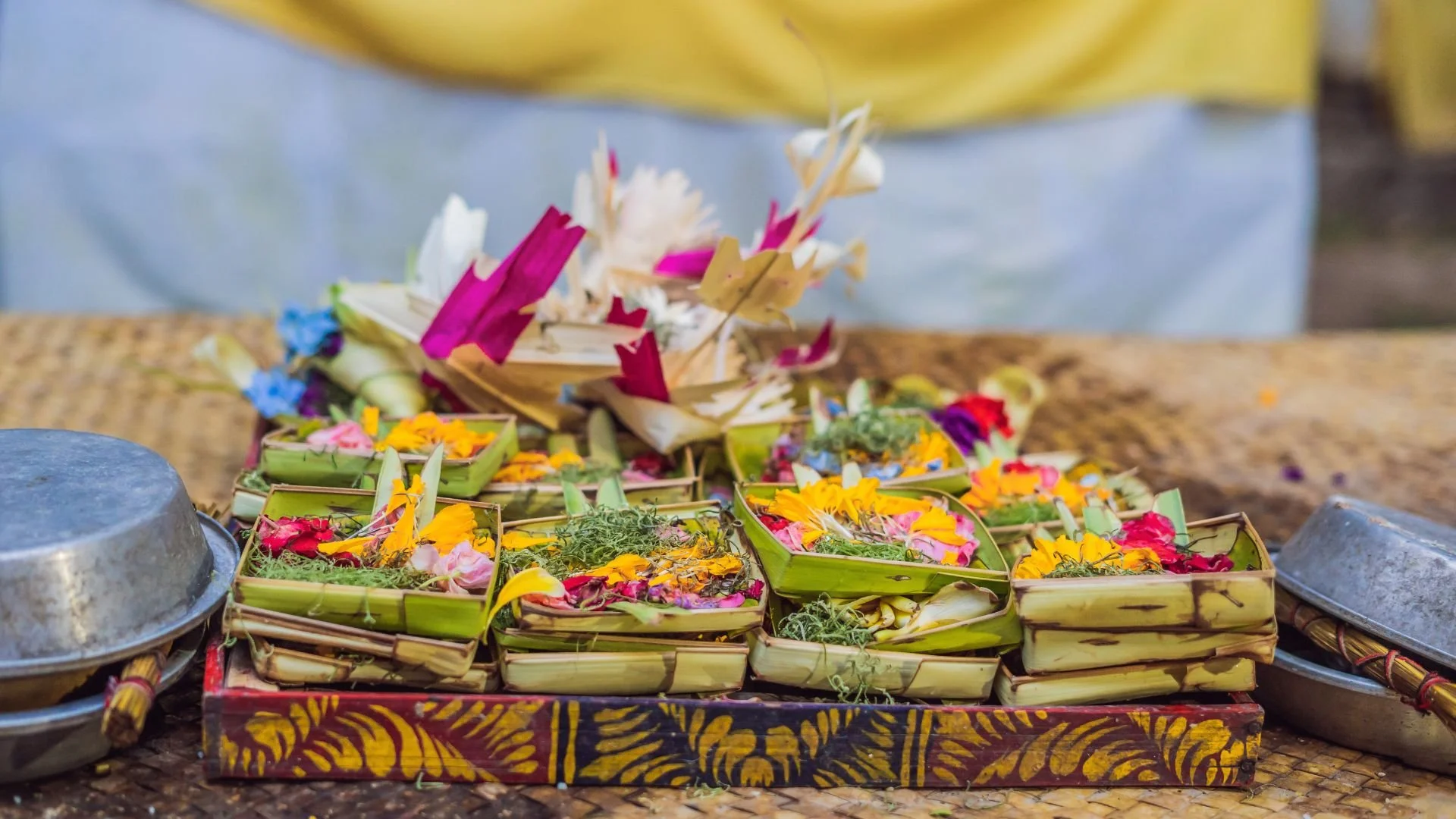
One of the first things many travelers notice in Bali is the presence of Canang Sari offerings placed along sidewalks, temple steps, shop entrances, and family compounds. Crafted from a small woven palm-leaf tray and filled with colorful flowers, grains of rice, betel leaf, and topped with a lit incense stick, the Canang Sari is one of the island’s most recognizable and meaningful Balinese Hindu traditions.
Though simple in appearance, each offering carries layers of symbolism that reflect Bali’s deep spiritual connection to gratitude, balance, and everyday devotion.
What Does Canang Sari Mean?
In the Balinese language, canang refers to the woven offering tray, while sari means essence or sincerity. Together, Canang Sari represents a heartfelt offering of gratitude presented to the divine.
Every element has a purpose. The flowers symbolize devotion and honor the main Hindu deities associated with the cardinal directions, while rice represents sustenance, prosperity, and thankfulness for life’s blessings. The rising incense carries prayers upward, creating a symbolic bridge between the human and spiritual worlds.
A Daily Ritual Across the Island
Throughout Bali, Canang Sari offerings can be found at the entrances of homes, restaurants, shops, temples, shrines, beneath sacred trees, beside statues, and even on car dashboards. They are usually prepared and placed each morning, though many families also make additional offerings throughout the day for special ceremonies and temple observances.
For the Balinese, this daily practice is far more than ritual. It is a living expression of Tri Hita Karana, the Balinese philosophy that emphasizes harmony between humans and God, humans and one another, and humans and nature.
Gratitude Woven Into Everyday Life
Preparing and placing Canang Sari is often a quiet, mindful moment. Families carefully arrange the flowers and offerings before presenting them with prayer, expressing gratitude for another day of life, health, and opportunity. Through this simple act, spirituality becomes woven into everyday life rather than reserved only for temples and ceremonies.
For visitors, understanding Canang Sari offers a deeper appreciation of Bali beyond its landscapes and attractions. These small offerings remind us that the island’s beauty is not only found in rice terraces and temples, but also in the daily acts of gratitude and mindfulness practiced by its people.
At Bisma Eight, we believe that learning about traditions such as Canang Sari allows travelers to connect more meaningfully with Bali’s culture, where even the smallest offering carries a profound message of respect, balance, and gratitude.
Join Bisma Eight’s Storytelling Experience → The Island’s Wisdom